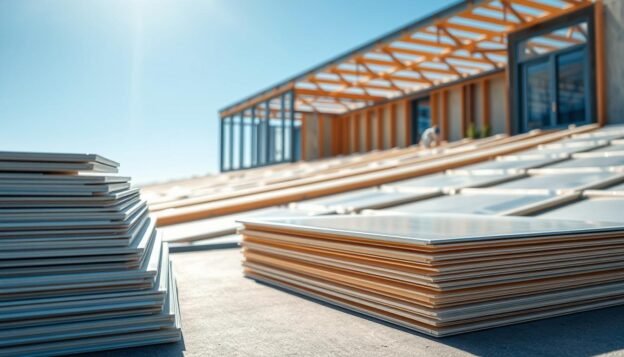
Have you ever wondered why flat roofing sheets are becoming the go-to choice for modern buildings? These essential components not only provide a sleek appearance but also play a crucial role in insulation integration and energy code compliance. In the United States, flat roofing sheets are a vital part of both commercial flat roof materials and residential applications. Their unique properties help ensure durability and efficiency in various climates.
VULCAN Plastics flat roofing sheets meet stringent energy codes. Understanding the importance of insulation in these systems is key to achieving optimal energy efficiency. Flat roofing sheets require careful consideration to integrate insulation effectively. This article will guide you through the critical aspects of flat roofing sheets, focusing on their benefits, insulation properties, and compliance with energy codes.
Key Takeaways
Flat roofing sheets are essential for modern building designs withInsulation Integration and Energy Code Compliance.
They enhance insulation and energy efficiency.
VULCAN Plastics provides quality solutions for flat roofing needs.
Compliance with energy codes is crucial for performance.
Understanding insulation integration can save costs in the long run.
What Are Flat Roofing Sheets and Their Benefits?
Flat roofing sheets are versatile materials used in modern construction. They come in various forms, including corrugated roofing panels, metal roof sheeting, and fiberglass roofing sheets. Each type offers unique benefits that make them suitable for different applications. Understanding these materials can help you make informed choices for your roofing needs.
Understanding Flat Roofing Sheets
Flat roofing sheets are designed to provide a smooth, even surface for roofs. They are ideal for both commercial and residential buildings. The three main types include:
Corrugated roofing panels: Known for their strength and durability.
Metal roof sheeting: Offers excellent weather resistance and longevity.
Fiberglass roofing sheets: Lightweight and easy to install, with good insulation properties.
Advantages of Flat Roofing Sheets
Flat roofing sheets offer several advantages that make them popular among builders and homeowners:
Ease of installation: These sheets can be quickly installed, saving time and labor costs.
Weather resistance: They can withstand harsh weather conditions, ensuring long-lasting protection.
Support for mechanical equipment: Flat roofs can easily accommodate HVAC systems and other equipment.
Versatility: Suitable for various building types, from warehouses to residential homes.
Common Applications for Flat Roofing Sheets
Flat roofing sheets are used in a variety of settings, including:
Commercial buildings, such as offices and warehouses.
Residential low-slope roofs.
Industrial facilities requiring durable roofing solutions.
VULCAN Plastics provides a wide range of flat roofing sheets, ensuring quality and reliability for your projects. Choosing the right type can enhance the performance and aesthetics of your building.
How Do Flat Roofing Sheets Enhance Insulation?
Flat roofing sheets play a crucial role in enhancing insulation for your building. These sheets work effectively with various insulation materials, ensuring optimal thermal resistance. This integration is essential for maintaining comfortable indoor temperatures and meeting energy efficiency standards.
Insulation Properties of Flat Roofing Sheets
Flat roofing sheets possess unique insulation properties that contribute to energy savings. Key benefits include:
High thermal resistance, reducing heat loss in winter and heat gain in summer.
Durability against weather elements, ensuring long-lasting performance.
Compatibility with various insulation types, enhancing overall efficiency.
Types of Insulation Compatible with Flat Roofing Sheets
Several insulation materials work well with flat roofing sheets, including:
PVC roofing membrane: Known for its excellent waterproofing and durability.
TPO flat roof covering: Offers energy efficiency and UV resistance.
EPDM rubber roofing: Provides flexibility and strong weather resistance.
By integrating these materials, you can achieve consistent R-values, reduce energy consumption, and comply with energy codes. VULCAN Plastics specializes in providing flat roofing sheets designed to work seamlessly with these insulation types, ensuring your roofing system operates efficiently.
What Are the Energy Code Compliance Requirements for Flat Roofing Sheets?
Understanding energy code compliance is essential for any project involving flat roofing sheets. These codes ensure that your roofing system meets specific standards for energy efficiency and safety. Various regulations exist, including the International Energy Conservation Code (IECC) and state-specific codes in New Jersey and Massachusetts. Compliance with these codes can significantly impact the performance of your commercial flat roof materials.
Understanding Energy Codes for Flat Roofing Sheets
Energy codes set requirements for insulation R-values, installation methods, and material standards. These codes are designed to promote energy efficiency and sustainability. For flat roofing sheets, this means using materials that not only meet these standards but also enhance the overall energy performance of your building.
VULCAN Plastics and Energy Code Compliance
VULCAN Plastics is committed to ensuring that its flat roofing sheets comply with energy codes. Their products, including TPO flat roof covering and standing seam metal panels, are designed to meet or exceed these regulations. This dedication to compliance helps you achieve long-term energy savings and reduces environmental impact.
Best Practices for Compliance with Flat Roofing Sheets
To ensure your flat roofing sheets meet energy code requirements, consider the following best practices:
Proper insulation placement to maximize R-value.
Effective drainage design to prevent water accumulation.
Thorough documentation of materials and installation methods.
Implementing these practices will help your project pass inspections and maintain energy efficiency over time.
How Can VULCAN Plastics Support Your Flat Roofing Sheets Needs?
When it comes to flat roofing sheets, VULCAN Plastics stands out as a leader in the industry. They offer tailored solutions that cater to your specific project requirements. Whether you need a PVC roofing membrane or metal roof sheeting, VULCAN Plastics has the expertise to provide high-quality options that meet your insulation and energy code compliance needs.
Customer testimonials highlight the reliability and satisfaction that comes with choosing VULCAN Plastics. Many clients have praised the durability and performance of their flat roofing sheets. These endorsements reflect a commitment to excellence that VULCAN Plastics consistently delivers in their products and services.
In conclusion, selecting VULCAN Plastics for your flat roofing sheets ensures you receive superior quality and compliance. Their solutions not only meet industry standards but also offer exceptional value for your roofing projects. Trust VULCAN Plastics to support your needs with top-notch flat roofing sheets that enhance your building’s performance.
FAQ
What are flat roofing sheets?
Flat roofing sheets are durable, flat materials used in roofing systems, designed to provide effective weather protection and insulation. They come in various types, including corrugated roofing panels, metal roof sheeting, and fiberglass roofing sheets, each offering unique benefits for different building applications.
What are the advantages of using flat roofing sheets?
Flat roofing sheets offer numerous advantages, including aesthetic appeal, the ability to support rooftop equipment, and adaptability to various building types. They are particularly beneficial for commercial flat roofs and residential low-slope roofs, providing efficient coverage and insulation integration.
How do flat roofing sheets contribute to insulation performance?
Flat roofing sheets enhance insulation performance by maintaining consistent R-values and reducing energy consumption. They work effectively with compatible insulation types, such as PVC roofing membranes, TPO flat roof coverings, and EPDM rubber roofing, ensuring your roofing system performs efficiently.
What energy code compliance requirements apply to flat roofing sheets?
Energy code compliance for flat roofing sheets includes adherence to insulation R-values, installation standards, and performance criteria. These codes vary by region, including states like New Jersey and Massachusetts, and are crucial for ensuring energy efficiency and passing inspections.
How can VULCAN Plastics help with flat roofing sheets?
VULCAN Plastics provides tailored solutions for your flat roofing sheets needs, offering a wide range of products designed to meet specific insulation and energy code compliance requirements. Their commitment to quality ensures reliable performance and customer satisfaction.
What types of insulation are compatible with flat roofing sheets?
Flat roofing sheets are compatible with various insulation types, including PVC roofing membranes, TPO flat roof coverings, and EPDM rubber roofing. These combinations help achieve optimal energy efficiency and compliance with energy codes.
What best practices should I follow for energy code compliance with flat roofing sheets?
To ensure energy code compliance with flat roofing sheets, follow installation standards, maintain the required insulation R-values, and conduct regular inspections. Consulting with professionals and utilizing high-quality materials, like those from VULCAN Plastics, can further enhance compliance.